
His nomination will require Senate confirmation, a process that may be complicated by ongoing Department of Justice investigations involving current Chair Jerome Powell and Governor Lisa Cook. Powell’s term as Chair ends in mid-May, and while he could technically remain a Fed governor through January 2028, past Chairs have chosen not to do so. If he steps down entirely, another Fed Board vacancy would open, giving the administration an opportunity to nominate a new Fed governor in addition to a new Chair.
The Fed Matters, but It Doesn’t Control Everything
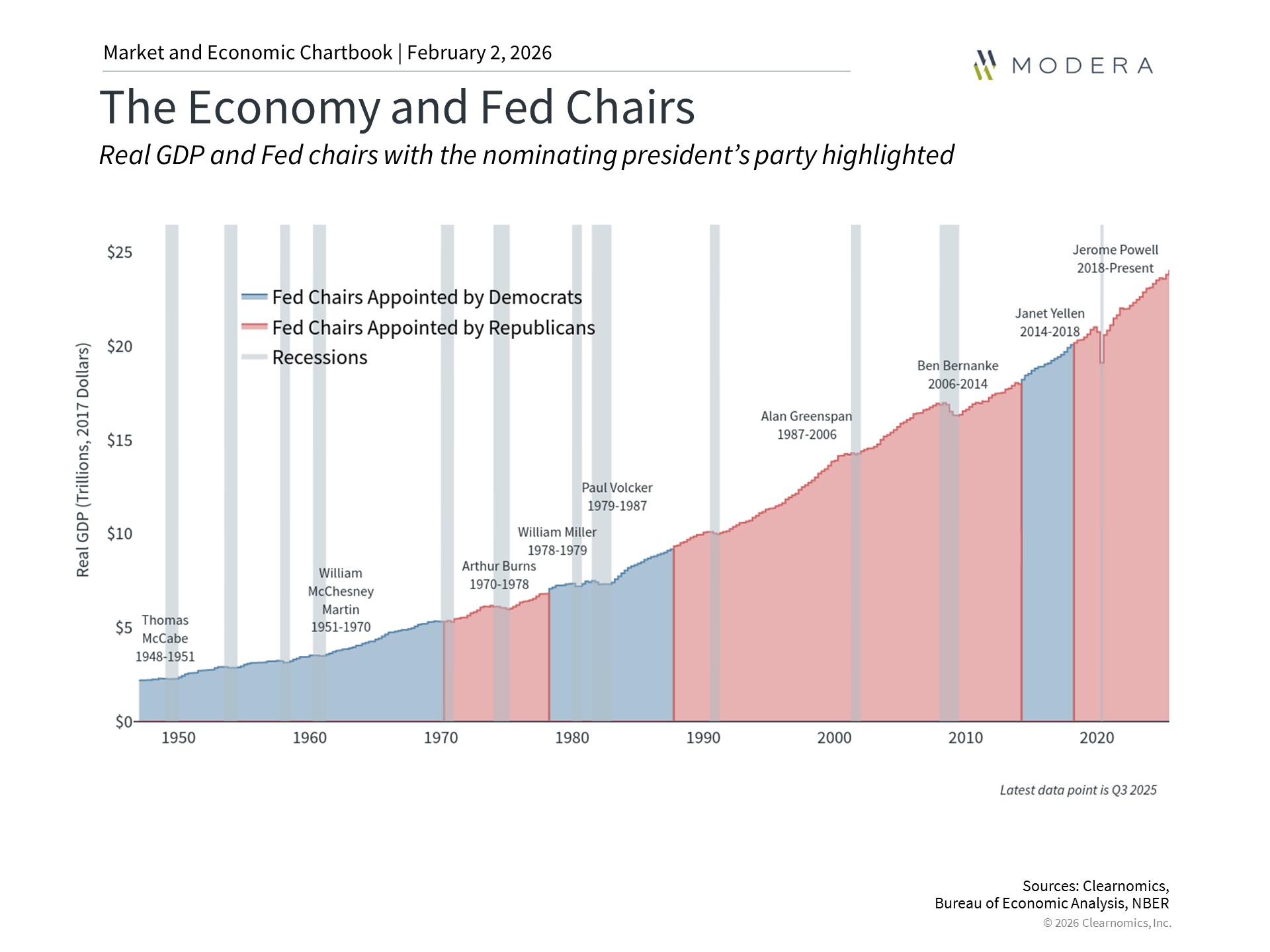
Even though the Fed plays a central role in shaping financial conditions, as illustrated in the Clearnomics chart below, history shows that markets have performed well across a wide range of rate environments and political climates. This is because Fed policy is typically responding to economic trends rather than driving them, and because decisions are made by committee. No single Chair can dictate policy unilaterally.
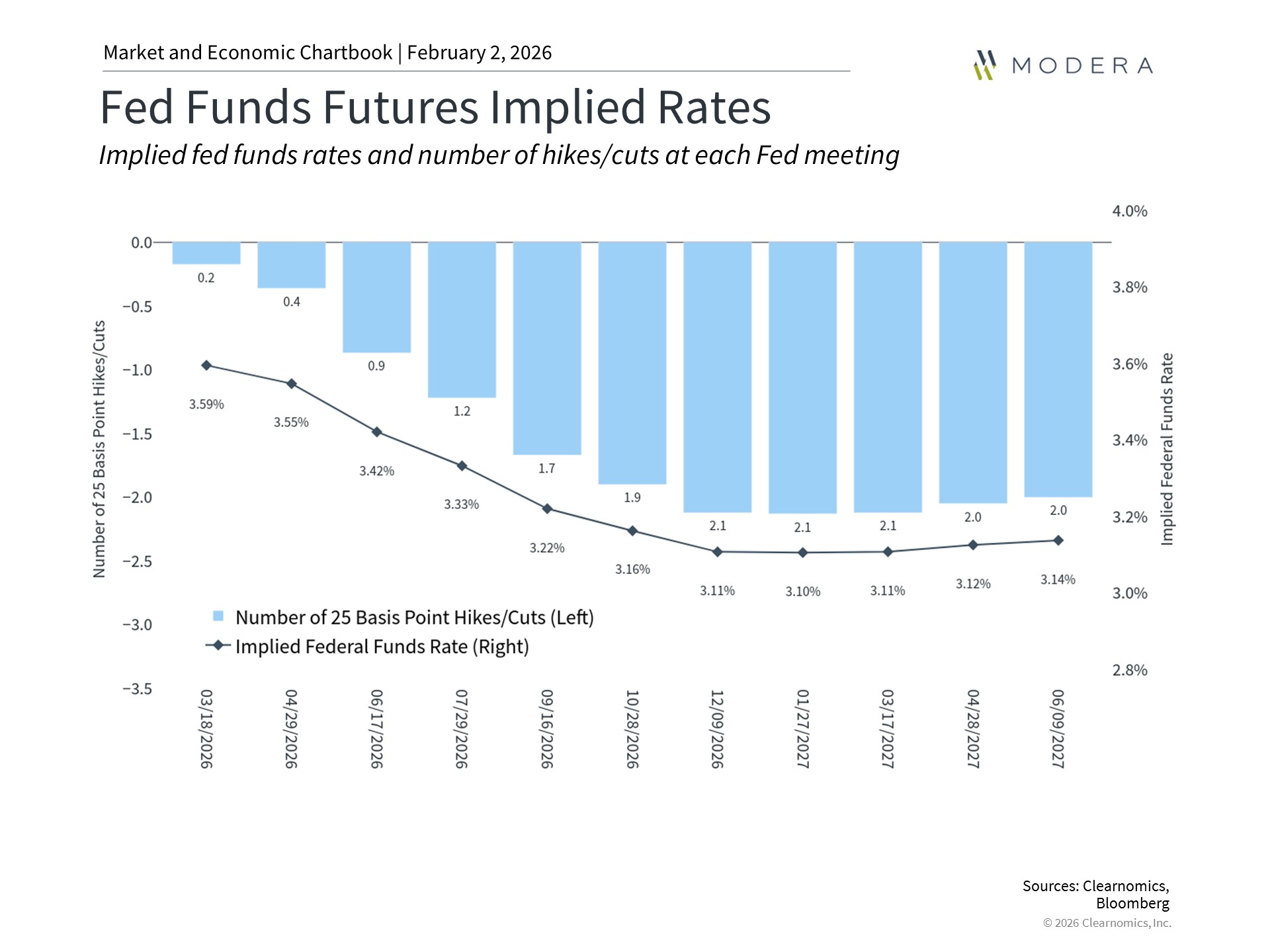
Following the announcement, markets showed little immediate shift in rate expectations. While the recent Fed meeting left rates unchanged at 3.50%–3.75%, futures pricing (refer to the Clearnomics chart below) continues to signal one more cut in July and potentially two additional cuts in 2026, as many are anticipating a more accommodative stance once new leadership is in place.
What Lower Rates Could Mean for Portfolios
Bonds
Lower interest rates generally provide support to bond prices. As rates fall, prices on existing bonds go up, as their higher yields become more valuable. With the federal funds rate now at 3.50%–3.75%, rate cuts have already helped the U.S. Aggregate Bond Index deliver solid returns, with the index posting a total return of 7.3% in 2025.
Equities
Lower rates may reduce borrowing costs for businesses. Lower interest expenses can improve profitability, support capital investment, and strengthen earnings growth, all of which generally benefit stock prices. Rate sensitivity is especially pronounced in more growth-oriented sectors, where future earnings become more valuable when discount rates decline.
Risks to Keep in Mind
While rate cuts often support both equity and bond markets, they can also signal underlying economic stress. If investors believe the Fed is cutting rates because economic growth is faltering, equity markets may react more cautiously. Similarly, cutting rates too aggressively could reignite inflation concerns, pushing long-term rates higher. Modera’s approach to fixed income, emphasizing income, quality, diversification, and duration, recognizes these risks and prepares portfolios to withstand various interest rate environments.
Bottom Line for Investors
A change in Fed leadership often raises questions, but long-term economic and market trends tend to persist across administrations and Chairs. While Kevin Warsh may bring a different policy style, the Fed’s consensus-driven process and the underlying health of the economy remain the key forces shaping market outcomes.
For investors, this announcement does not call for any changes to a well-constructed portfolio. Staying invested and remaining patient, disciplined, and focused on the long term, continues to be the foundation of a sound investment strategy.
